



GINA 2026 – Key Highlights
Global Strategy for Asthma Management & Prevention
Mission & Objectives
- Developed by the Global Initiative for Asthma (GINA) to provide evidence-based recommendations for asthma diagnosis, treatment, and prevention.
- Focuses on:
- Achieving optimal symptom control.
- Preventing severe exacerbations, lung function decline, and medication-related adverse effects.
- Improving global access to essential inhaled therapies, particularly low-dose ICS–formoterol, to reduce preventable asthma deaths.
Major Updates in GINA 2026
1. Acute Asthma Management
Standardized Clinical Flowcharts
- Four evidence-based flowcharts for adults and children.
- Clear classification:
- Mild
- Moderate
- Severe
- Life-threatening asthma
Pediatric Assessment
- Recommend validated severity scoring systems such as PRAM (Pediatric Respiratory Assessment Measure).
Asthma with Anaphylaxis
- Administer intramuscular epinephrine immediately before bronchodilator therapy when both conditions coexist.
Oxygen Therapy
- Start supplemental oxygen only when:
- SpO₂ <92%
- Oxygen targets:
- Adults & older children: ≤95%
- Children ≤5 years: ≥92%
Safer SABA Use
- Lower recommended SABA doses to minimize adverse effects, including SABA-induced lactic acidosis.
2. Treatment Strategy Updates
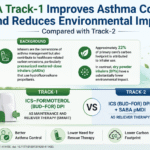
Track 1 (Preferred)
Anti-inflammatory Reliever Therapy
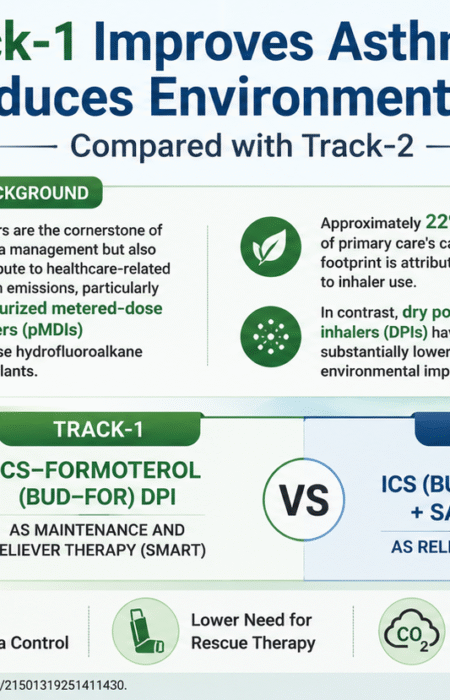
- As-needed low-dose ICS–formoterol remains the preferred reliever from Steps 1–4.
- Demonstrated benefits:
- Fewer severe exacerbations
- Reduced emergency visits
- Better long-term control than SABA-only therapy.
Track 2 (Alternative)
- Step 1 now includes ICS–SABA (Anti-inflammatory Reliever Therapy).
- Based on BATURA trial evidence showing reduced risk of severe exacerbations compared with SABA alone.
3. Severe Asthma Updates
New Biologic
Depemokimab
- Ultra-long-acting anti-IL-5 monoclonal antibody
- Administration: Every 26 weeks
- Approved for:
- Severe eosinophilic asthma (≥12 years)
- Chronic rhinosinusitis with nasal polyps
New Biosimilar
- Omalizumab-igec
- First biosimilar anti-IgE therapy included in GINA.
Updated Treatment Algorithms
- Refined decision pathways for:
- Biologic selection
- LAMA add-on therapy
- Triple inhaled therapy
4. Diagnosis & Practical Guidance
Bronchodilator Response
Positive reversibility test:
- Increase in FEV₁ or FVC
- ≥12% AND ≥200 mL from baseline (adults).
Biomarkers
Support diagnosis of Type 2 inflammation:
- Blood eosinophilia
- FeNO:
- Adults: >50 ppb
- Children: >35 ppb
Normal values do not exclude Type 2 asthma.
Inhaler Technique
New practical reminder:
- Shake all suspension pMDIs immediately before every actuation to ensure correct drug delivery.
New Assessment Tools
GINA now highlights:
- CAAT (Chronic Airways Assessment Test)
- Peds-AIRQ (Pediatric Asthma Impairment and Risk Questionnaire)
Slide Sets
Whats new in GINA 2026
Download from Below Link :
Whats-new-in-GINA-2026-WEB (1)
GINA 2026 : Severe Asthma
Download from Below Link :
GINA-Severe-Asthma-Slides-2026-WEB
Key Take-Home Messages
- ✅ ICS–formoterol remains the preferred reliever strategy.
- ✅ New standardized emergency management flowcharts improve consistency of care.
- ✅ Conservative SABA dosing enhances patient safety.
- ✅ Depemokimab expands treatment options for severe eosinophilic asthma.
- ✅ Biomarkers support—but do not replace—clinical diagnosis.
- ✅ Correct inhaler technique remains a cornerstone of effective asthma management.
- ✅ Global priority remains improving equitable access to inhaled corticosteroid-containing therapies.

Previous


Thanks for this knowledge update on asthma guidelines